

Meet the Team
-
![]()
emmanuel "noble" williams
-
![]()
GeorgePatrick "George" Hutchins
-
![]()
B. arneson
-
![]()
Bridget Conley
-
![]()
Rohan Khazanchi
-
![]()
Hannah craig
-
![]()
Tiffany Smith







Internal Projects—
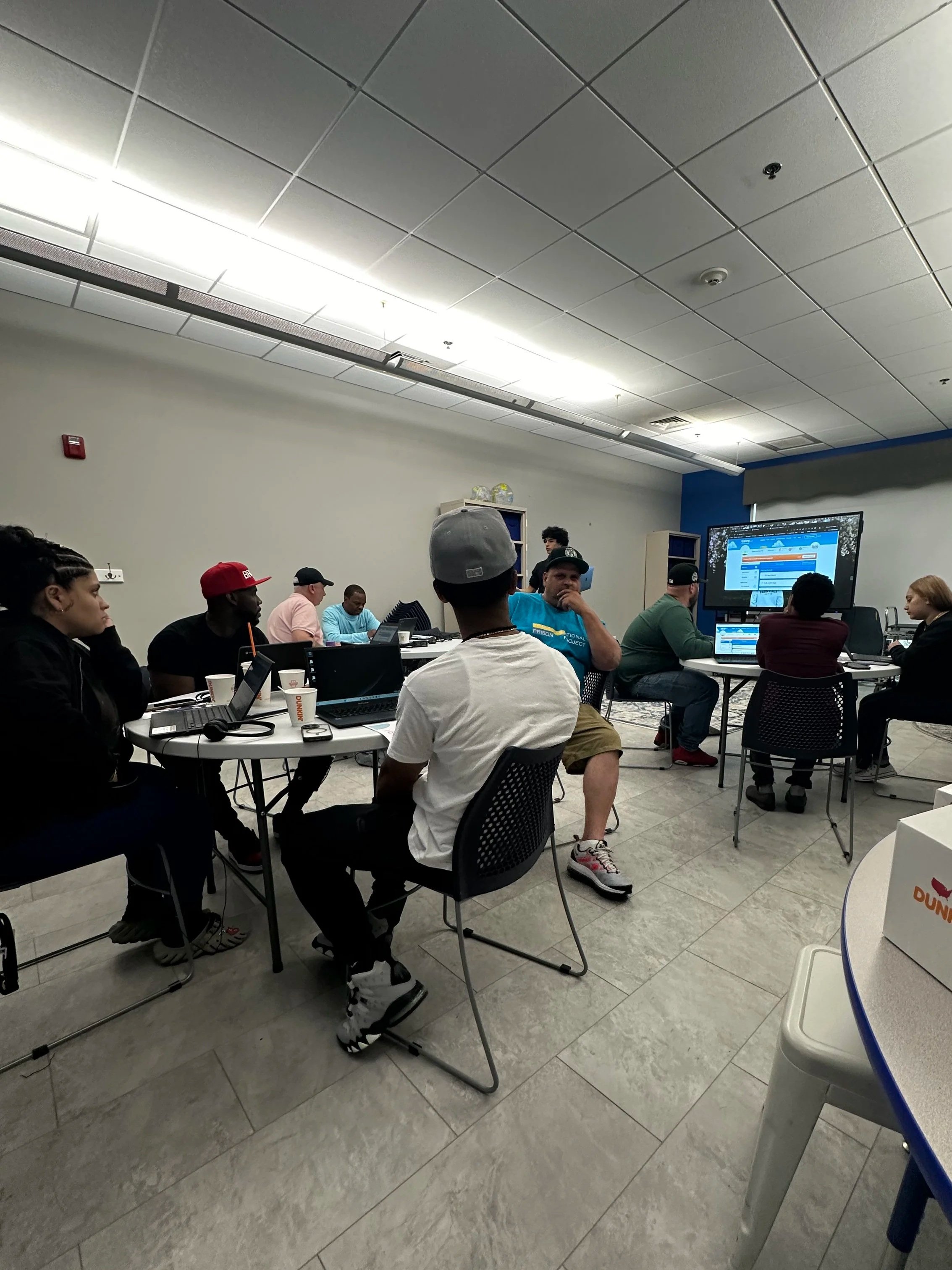
These projects focus on building TPP’s programmatic capacity, evaluating the effectiveness of our offerings, and improving the participant experience.
-
This project evaluates the impact of TPP’s Digital Literacy program which introduces returning citizens to current technologies such as laptops, cellphones, digital applications, and the suite of Microsoft Office programs. All participants complete a baseline and endline survey to assess how their understanding and confidence with these various forms of technology has changed.
-
Since 2020, we have been collecting data on TPP’s Phase 1-Introduction to Restorative Justice Programming. From this dataset, our team tracks how participant’s views on justice evolve after going through the circle process. These data are used for both internal and external reports.
-
We collect data on the frequency and amount of contact TPP has with community partners, returning citizens, and collaborators, as well as, the types of events in which program staff participate.
● Program Overview
External Projects
These projects focus on collaborations with local universities and other organizations to deploy restorative justice in the process of social scientific inquiry.
phase I focus group
Started in 2025, this project seeks to provide participants going through the Phase 1 program with a formal opportunity to explore their evolving views on the foundational principles of restorative justice and how these lessons have impacted the ways they show up personally and professionally.
Public Scholarship
Restorative Justice Methodology/Research Methods: Our innovative view on the research process and centering the lived experience of systems impacted individuals has been accepted for publication as a chapter in a peer-reviewed, edited book collection to be published with Routledge.
academic partnerships & data collaborations
Agncy
Boston Medical Center
Harvard University
Suffolk University
World Peace Foundation
our results
The data below are drawn from five years of self reports collected from those taking part in TPP’s Phase I Introduction to Restorative Justice training.
you would engage in rj processes to address harm encountered in your own life.
you would recommend engagement in rj processes to a loved one who has encountered harm in their life.
rj is a viable alternative to incarceration
Age
19.2%
15.3%
30.8%
A total of 132 participants completed the survey for the phase I training—to date.
34.6%
gender
32.6%
67.4%
Race
.7%
8.4%
45.0%
3.8%
41.9%

● FAQs
Frequently Asked Questions
-
Our restorative data department collects information on the core programming efforts of TPP. This includes a comprehensive survey and focus group–based evaluation of our Phase 1 Restorative Justice circles, a survey evaluation of our Digital Literacy Program, and a yearly census of all programs in which TPP has participated.
Additionally, our team is engaged in several external projects with collaborators from Boston University, Tufts University, and Harvard University. Lastly, we are exploring ways to bring rigorous scholarship to a public- and community-facing audience.
-
Restorative methodology focuses on using strategies and techniques of data collection that diminish power hierarchies and build community between participants and researchers.
By infusing core principles from restorative justice throughout the research process, data can be collected, analyzed, and documented in ways that promote healing and meaningful collaboration between those with academic experience and those with community experience.
-
This methodology draws strength from Indigenous practices, de-colonial methodologies, and community-based participatory research.
Though closely related to each of these, restorative methodology offers additional tools to further diminish the harmful impacts that can emerge from standard research methodologies.
Our data department currently has a peer-reviewed book chapter under review that describes this method in detail.
-
Our data department is currently developing a non-resident fellowship program that will train both those with academic experience and those with community experience to engage in research design and data collection in restorative ways.
The format of this training will parallel TPP’s Phase 1 Introduction to Restorative Justice training, taking place over 6–8 sessions, but with a specific focus on the harm and trauma that can emerge from extractive data collection projects and on the ways data can be used to promote healing and accountability.

hear from our community: