
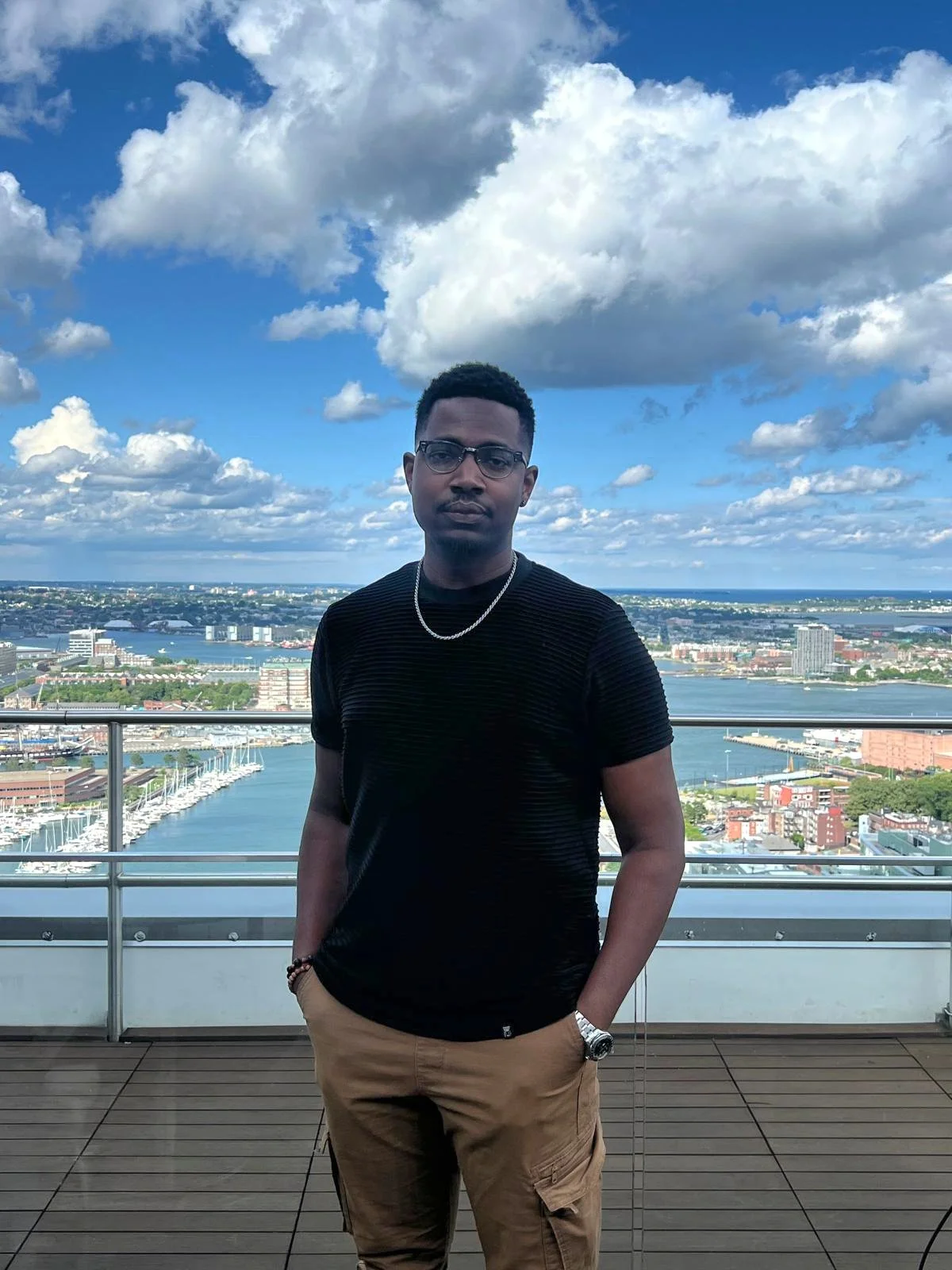
georgepatrick “george” hutchins
“Part of me still believes that when people know better, we do better. And for me, having clear and robust data is the first step towards knowing better. Unfortunately, the standard processes by which the “production of knowledge” occurs are often extractive, one-sided, and distanced from the complexities of the real word. Here, in our data department, knowledge is uncovered and elevated in community and by community. That is what we want to accomplish--to elevate the lived experiences of those who are experts in the complexities of their own lives."
GeorgePatrick “George” Hutchins is a Doctoral Candidate (PhD) in Sociology at Harvard University and MD Candidate at Harvard Medical School (HMS). He received his BA in Biochemistry and Sociology with honors from Indiana University in 2019, graduating with high distinction, and his AM in Sociology from Harvard University in 2025. George has completed the first three years of his medical training and will finish medical school concurrently with his PhD.
George’s research and teaching interests exist at the intersection of culture, racial inequality, and carcerality, and how these impact the health of those currently and formerly incarcerated, as well as the broader population. This work is motivated by the need to further elucidate the medical consequences of incarceration and interrogate the role physicians have played and continue to play in legitimizing jail, prison, and policing systems.
At Harvard, George has held a variety of research, teaching, and service roles. He previously worked as a graduate research assistant at the Harvard Kennedy School Malcolm Wiener Center for Social Policy, where he wasengaged in several projects exploring the ongoing harms of incarceration. Since 2020, he has worked alongside the Transformational Prison Project (TPP) to support data collection efforts, then becoming a certified circle keeper in 2022, and officially joining TPP staff in 2024 as Co-Chair of the Scientific Advisory Council. Through this work, he aims to bring the practice of restorative justice to medical and academic spaces by centering the voices of those with lived experience. George intends to practice internal medicine and produce emancipatory scholarship that advances discourse and transforms conditions within and beyond the academy.